Quran
23 items across 5 content types
Debates (2)
 3:07:20
Mohammed Hijab vs David Wood — Trinity or Tawhid?
A full structured debate between Mohammed Hijab and David Wood on the core theological question: Is God's nature best understood through the Islamic concept of Tawhid (absolute oneness) or the Christian doctrine of the Trinity? Hosted by York College MSA in New York.
 1:48:00
Shaykh Uthman vs Captain Tazaryach — Is the Bible the Word of God?
A heated debate between Shaykh Uthman Ibn Farooq (Muslim) and Captain Tazaryach (Hebrew Israelite) on whether the Bible is the preserved Word of God. Shaykh Uthman presents multiple internal contradictions in the Old Testament — including three conflicting accounts of King Saul's death, contradictory ages for King Ahaziah, and irreconcilable genealogies of Jesus in Matthew vs Luke vs 1 Chronicles. The debate concludes with an extensive discussion on underage marriage in biblical tradition, including Rashi's commentary on Rebekah's age and early Christian sources on Mary's age at marriage.
Questions (9)
Does the Qur'an tell Muslims to kill non-Muslims?
No. Critics frequently quote Qur'an 9:5 out of context — 'kill the polytheists wherever you find them' — to claim this. However, this verse was revealed in the context of a specific peace treaty that was unilaterally broken by the Makkan polytheists. The very next verse (9:6) commands Muslims to grant protection to any enemy who seeks it and escort them to a place of safety. Reading any text out of context distorts its meaning.
Has the Bible been preserved or corrupted — what does Islam teach about this?
Islam teaches that the original revelations to Moses ﷺ (the Torah) and Jesus ﷺ (the Gospel/Injeel) were divine. However, the Quran also teaches that over time, these scriptures underwent *tahrif* — deliberate alteration and textual corruption. This is confirmed by mainstream biblical scholarship, which documents thousands of manuscript variants, editorial additions, and inconsistencies across biblical manuscripts. The Bible we have today is not the original preserved revelation — it is a compiled collection of texts that has been copied, translated, and edited across centuries.
What does Islam say about Jesus (Isa)?
Islam reveres Jesus (Isa ibn Maryam) as one of the greatest prophets and the Messiah. Muslims believe in his virgin birth, his miracles, and his return before the Day of Judgment, but do not accept his divinity or crucifixion as understood in Christianity.
What is dhikr in Islam and how does it help with stress and anxiety?
Dhikr (Arabic: ذِكْر — remembrance of Allah) refers to the verbal, mental, and physical acts of remembering Allah — phrases like *SubhanAllah* (Glory be to Allah), *Alhamdulillah* (Praise be to Allah), *Allahu Akbar* (Allah is Greatest), and *La ilaha illa Allah* (There is no god but Allah). The Quran states explicitly: *'Verily, in the remembrance of Allah do hearts find rest.'* (Ar-Ra'd 13:28). Dhikr is Islam's prescription for the anxiety, restlessness, and emptiness that comes from disconnection from Allah.
What is Taraweeh prayer and why is it special in Ramadan?
Taraweeh (Arabic: تراويح — relaxation, rest between units) is the supererogatory night prayer performed exclusively in Ramadan, after Isha prayer. It is a recommended Sunnah — not obligatory but strongly recommended. Taraweeh is typically performed in congregations at mosques with the aim of completing the entire Quran over the 30 nights of Ramadan. It is among the most beloved and spiritually powerful practices of Islamic devotion — the long standing prayer, beautiful Quran recitation, and communal atmosphere of Ramadan nights make Taraweeh an experience unique in the Muslim calendar.
Who is Prophet Muhammad ﷺ and what was his character like?
Muhammad ﷺ is the final Prophet sent by God to all of humanity. His character was described by his wife Aisha as 'a reflection of the Qur'an.' He was known for extraordinary mercy, forgiveness, humility, equality, and gentleness — even celebrated by non-Muslim scholars like Mahatma Gandhi and George Bernard Shaw as one of history's greatest figures.
Why are Muslims divided into sects?
Islam itself commands Muslims to be united and not to create divisions. The Qur'an explicitly warns against sectarianism. The Prophet Muhammad ﷺ predicted that his ummah would divide into 73 sects, with only one following the correct path — those who follow the Qur'an and authentic Sunnah. Muslims should identify themselves simply as 'Muslims' and use the Qur'an and authentic hadith as the criteria to judge any group's claims.
Why do Muslims believe the Qur'an is divine?
Muslims believe the Qur'an is divine based on its historical preservation, literary inimitability, internal consistency, and the inability of any human to have produced its content given the historical context of 7th century Arabia.
Why should someone consider Islam?
Islam offers a direct, personal relationship with the Creator without any intermediaries; a clear, evidence-based faith supported by the preserved Qur'an; a practical and balanced way of life covering spiritual, social, and personal well-being; and a universal, timeless message — the same core monotheistic message brought by all Prophets throughout history.
Articles (9)
Biblical Prophecies on the Advent of Muhammad ﷺ, the Prophet of Islam
Evidence from the Bible pointing to the coming of the final Prophet
Islamic Research Foundation
The Biblical prophecies on the advent of the Prophet Muhammad ﷺ are evidence of the truth of Islam for people who believe in the Bible. This article examines prophecies from Deuteronomy, Isaiah, John, and Genesis that point to a prophet like Moses — from among the Ishmaelites — into whose mouth God would put His words.
Contradictions in the Bible: A Comprehensive Case Study
An evidence-based examination of internal contradictions within the Biblical text
TheOpenQuran Research
The Qur'an states that if a scripture were from other than Allah, people would find within it much discrepancy (4:82). This article presents a comprehensive, categorised examination of over 100 internal contradictions found within the Bible — spanning creation narratives, historical records, genealogies, the life of Jesus, resurrection accounts, and theological doctrines. Each contradiction is presented with exact chapter-and-verse references so readers can verify independently. The Islamic position is not that the original revelations (Torah, Psalms, Gospel) were flawed, but that human transmission has introduced alterations — precisely as the Qur'an warns.
Dealing with Worries and Stress
Islamic Remedies for Anxiety, Grief, and Depression
Sheikh Muhammed Salih Al-Munajjid
A comprehensive guide to the Islamic approach for dealing with worries, stress, anxiety, and grief. Drawing upon the Qur'an, the Sunnah, and the writings of Imam Ibn al-Qayyim, this work presents over twenty practical and spiritual remedies — from strengthening one's faith and making du'aa, to relying upon Allah, remembering death, and focusing on the present. The book addresses the reality that this world is inherently a place of hardship, and provides believers with the tools to find inner peace through submission to Allah.
How the Bible Was Changed: Verse-by-Verse Manuscript Evidence
What happens when you compare the King James Bible against the oldest surviving manuscripts of the New Testament?
TheOpenQuran Research
Every major modern Bible translation (NIV, ESV, NASB, RSV) contains footnotes where editors acknowledge that certain verses — including some of the most theologically significant — are 'absent from the earliest and most reliable manuscripts.' This article examines the most significant of those cases: specific verses where the text was demonstrably added, altered, or removed between the oldest surviving manuscripts and later copies. This is not a fringe Islamic claim — it is the consensus of mainstream Christian biblical scholarship, including conservative evangelical scholars like Bruce Metzger and F.F. Bruce. The Islamic concept of tahrif (textual alteration) is precisely what modern textual criticism confirms.
Iran, America, and Israel: The History Behind the Conflict and the Islamic Prophetic Lens
From the 1941 Anglo-Soviet Invasion to the 2025 War — and What Islamic Prophecy Says About the Region
TheOpenQuran
The conflict between Iran, America, and Israel is not a product of the post-9/11 world. Its roots stretch back to World War II, when Britain and the Soviet Union invaded Iran in 1941 and installed a compliant Shah. What followed — revolution, war, sanctions, nuclear brinkmanship, and assassination — unfolded over eight decades of geopolitical entanglement. This article traces that history in full: from the forced abdication of Reza Shah to the Islamic Revolution of 1979, through the Iran-Iraq War and the nuclear standoff, to the collapse of the JCPOA and the June 2025 Israeli airstrikes on Iran. The second part examines what authentic Islamic prophetic traditions say about Iraq, Syria, Persia, and the region now at the centre of global conflict — and what those narrations mean for Muslims navigating an age of fitna.
Prophet Muhammad ﷺ in the Bible, Torah, and World Scriptures: The Complete Evidence
How the Torah, Gospels, Hindu Vedas, and Buddhist scriptures all prophesied the final Messenger of God
TheOpenQuran Research
Is Muhammad ﷺ mentioned in the Bible, Torah, and world scriptures? Yes — and this is the complete evidence. From Deuteronomy 18:18 and Isaiah 42 to Song of Solomon's 'Muhammadim' in Hebrew, the Gospel of John's Comforter, the Hindu Bhavishya Purana naming him explicitly, the Vedas' Narasansha, and the Buddhist six-criteria prophecy — every major tradition points to one man.
Numerical Miracles in the Qur'an: A Mathematical Case for Divine Authorship
Symmetrical word pairs, natural cycles, and structural patterns — encoded across 114 chapters over 23 years
The Qur'an contains hundreds of verified examples where specific Arabic words appear the exact same number of times as their counterparts — 'this world' and 'the hereafter' each 115 times, 'man' and 'woman' each 24 times, 'day' exactly 365 times matching the solar year. These pairings are not cherrypicked coincidences. They form a systematic numerical architecture woven across 114 chapters revealed to an illiterate man over 23 turbulent years — without computers, without editing, and without numbered verses. This article presents the evidence, corrects common misquotations, and examines whether any human being could have produced it.
Qur'an and Modern Science: Compatible or Incompatible?
A comprehensive exploration of scientific facts mentioned in the Qur'an over 1400 years ago
Dr. Zakir Naik
This article examines the compatibility between the Qur'an and modern science, presenting established scientific facts from fields including astronomy, physics, geography, geology, oceanology, biology, botany, zoology, physiology, embryology, and general science — all of which were described in the Qur'an over fourteen centuries ago, long before their discovery by modern science.
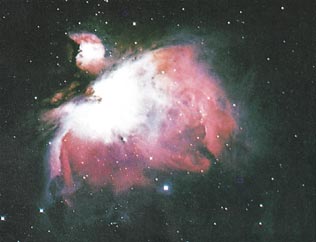
Scientific Miracles in the Holy Quran
From A Brief Illustrated Guide to Understanding Islam
I.A. Ibrahim
The Quran, revealed over fourteen centuries ago, contains descriptions of natural phenomena that have only been confirmed by modern science. From human embryology to the structure of mountains, from the origin of the universe to the formation of clouds — the precision of these descriptions points to a source beyond human knowledge of the seventh century.
Qur'an Verses (2)
وَإِن كُنتُمْ فِي رَيْبٍ مِّمَّا نَزَّلْنَا عَلَىٰ عَبْدِنَا فَأْتُوا بِسُورَةٍ مِّن مِّثْلِهِ وَادْعُوا شُهَدَاءَكُم مِّن دُونِ اللَّهِ إِن كُنتُمْ صَادِقِينَ
Wa in kuntum fi raybin mimma nazzalna 'ala 'abdina fa'tu bisuratin min mithlihi wad'u shuhada'akum min dunillahi in kuntum sadiqin
“And if you are in doubt about what We have sent down upon Our Servant, then produce a surah the like thereof and call upon your witnesses other than Allah, if you should be truthful.”
إِنَّا نَحْنُ نَزَّلْنَا الذِّكْرَ وَإِنَّا لَهُ لَحَافِظُونَ
Inna nahnu nazzalna adh-dhikra wa inna lahu lahafizun
“Indeed, it is We who sent down the message [the Qur'an], and indeed, We will be its guardian.”
Hadith (1)
مَا مِنَ الأَنْبِيَاءِ نَبِيٌّ إِلاَّ أُعْطِيَ مَا مِثْلُهُ آمَنَ عَلَيْهِ الْبَشَرُ، وَإِنَّمَا كَانَ الَّذِي أُوتِيتُهُ وَحْيًا أَوْحَاهُ اللَّهُ إِلَيَّ، فَأَرْجُو أَنِّي أَكْثَرُهُمْ تَابِعًا يَوْمَ الْقِيَامَةِ
Ma min al-anbiya'i nabiyyun illa u'tiya ma mithluhu amana 'alayhi al-bashar, wa innama kana alladhi utituhu wahyan awhahu Allahu ilayya, fa arju anni aktharuhum tabi'an yawm al-qiyamah
Narrated by Abu Hurairah