Miracles
6 items across 2 content types
Questions (3)
What are the scientific miracles in the Quran — and are they genuine?
The Quran contains numerous descriptions of natural phenomena that were only confirmed by modern science: the expanding universe (51:47), the barrier between fresh and salt water bodies (55:19–20), the cerebrum's role in lying (96:15–16), the water cycle beginning from clouds (24:43), the formation of mountains as stabilisers and how they resemble pegs driven deep (78:6–7), and detailed stages of human embryonic development. Skeptics argue some claims are vague or post-hoc interpretations; Muslim scholars argue the consistent pattern of accuracy across diverse scientific domains, in a 7th-century text, is evidence of divine authorship.
What are the numerical miracles in the Quran and why are they significant?
The Quran contains extraordinary numerical patterns that appear impossible to produce by human design — word pairs that occur the same number of times (e.g. 'man' and 'woman' — both 24 times; 'world' and 'hereafter' — both 115 times; 'angels' and 'devils' — both 88 times). These are not cherry-picked curiosities but systematic patterns across the entire text of 77,000+ words, composed by an illiterate man in 7th-century Arabia. Their existence is most convincingly explained by divine authorship.
What does the Quran say about embryology — and does it match modern science?
The Quran describes human embryonic development in Surah Al-Mu'minun (23:12–14) in a sequence that closely matches modern embryological science: a drop of fluid, then a clinging ('alaqah), then a chewed-like lump (mudghah), then bones, then covering of bones with flesh. The Canadian embryologist Professor Keith Moore stated these descriptions were highly accurate and consistent with modern embryology — remarkable for a text from the 7th century. Critics argue that some knowledge was available in ancient medicine (Galen, Aristotle), but the Quranic account is more accurate and distinct from classical errors.
Articles (3)
Numerical Miracles in the Qur'an: A Mathematical Case for Divine Authorship
Symmetrical word pairs, natural cycles, and structural patterns — encoded across 114 chapters over 23 years
The Qur'an contains hundreds of verified examples where specific Arabic words appear the exact same number of times as their counterparts — 'this world' and 'the hereafter' each 115 times, 'man' and 'woman' each 24 times, 'day' exactly 365 times matching the solar year. These pairings are not cherrypicked coincidences. They form a systematic numerical architecture woven across 114 chapters revealed to an illiterate man over 23 turbulent years — without computers, without editing, and without numbered verses. This article presents the evidence, corrects common misquotations, and examines whether any human being could have produced it.
Qur'an and Modern Science: Compatible or Incompatible?
A comprehensive exploration of scientific facts mentioned in the Qur'an over 1400 years ago
Dr. Zakir Naik
This article examines the compatibility between the Qur'an and modern science, presenting established scientific facts from fields including astronomy, physics, geography, geology, oceanology, biology, botany, zoology, physiology, embryology, and general science — all of which were described in the Qur'an over fourteen centuries ago, long before their discovery by modern science.
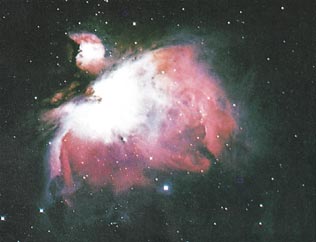
Scientific Miracles in the Holy Quran
From A Brief Illustrated Guide to Understanding Islam
I.A. Ibrahim
The Quran, revealed over fourteen centuries ago, contains descriptions of natural phenomena that have only been confirmed by modern science. From human embryology to the structure of mountains, from the origin of the universe to the formation of clouds — the precision of these descriptions points to a source beyond human knowledge of the seventh century.